FIELD REPORT NO. 004
The Biological Impact of Thin Air and UV
A
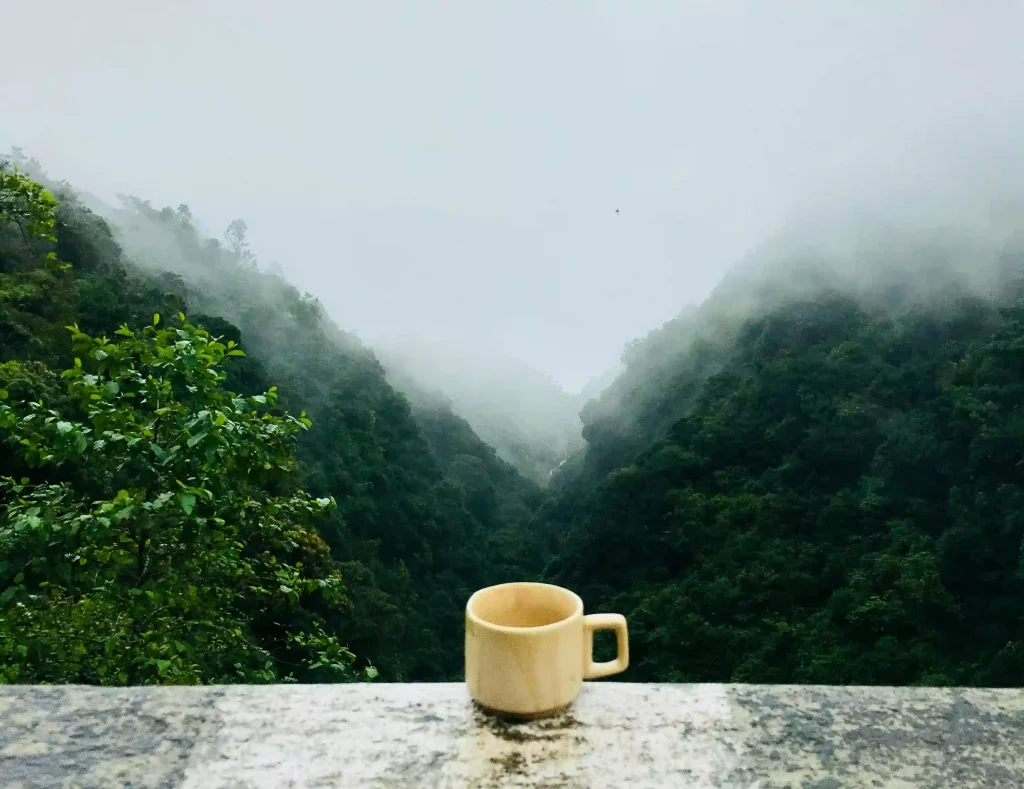
At 3,000 meters, life is a struggle. For the tea plant, the Himalayan environment is one of extreme “stress.” At The Great Himalayan Tea Atelier, we view this stress as our most valuable ingredient.
UV Intensity & The Antioxidant Shield
The higher the altitude, the more intense the UV exposure. To survive, the tea plant produces high concentrations of polyphenols—essentially its own “sunscreen.” When you consume our harvests, you are ingesting the plant’s biological defense system.
L-Theanine Concentration
Cold mountain nights slow the plant’s metabolism. This prevents the conversion of amino acids into bitter catechins, preserving L-theanine—the compound responsible for the meditative “Tea High.”
Young Mountain Minerals
The Himalayas are geologically “young.” The soil is packed with un-weathered minerals, providing the “Structure” and “Body” you feel on the back of your palate.